Four researchers tracing where generated identities split
Khlong Trace Laboratory studies the small breaks that change how a business is understood: a translated name attached to the wrong branch, a directory category treated as fact, or a citation that supports the entity but not the claim.
i. What we are
The laboratory's first record began with one restaurant and three incompatible identities. In one generated answer it belonged to a hotel. In another it had moved to a neighbouring province. A third answer cited an old directory page whose description no longer matched the business. None of the errors looked dramatic in isolation. Together, they formed a sequence: a name was interpreted, an entity selected, a category inherited, and a description written as though the chain were secure.
Four researchers began preserving these chains. Their backgrounds covered search-result analysis, bilingual reference editing, qualitative research protocols, and source verification. The shared record gradually became Khlong Trace Laboratory. Its method grew from a practical irritation with visibility reporting that stopped at whether a name appeared. The team wanted to know what the system believed the name referred to, which public materials appeared to shape that belief, and exactly where the description moved beyond the evidence.
Thailand makes these questions unusually dense. A single business can be represented through Thai spelling, several English transliterations, map categories, social profiles, booking pages, local directories, and geographic labels that make sense to residents but remain ambiguous in a wider index. The laboratory treats these variations as part of the object being studied. Its position is plain: a citation becomes useful only after its relationship to the nearby claim has been checked, while a mention has little value when the underlying identity is unstable.
ii. How we work
The work begins with a saved generated answer: the prompt, visible citations, language, model context, and observation date. The team records what can be seen before proposing why it appeared. Thai and English formulations are used according to the case under study — language change is part of the evidence when it alters the name, category, or geographic result.
The four source relationships — ✓ direct support · ↳ stretched support · ⤳ borrowed identity · — unsupported arrival — grew out of the observations. They now cover the classification in every case in the research record.
iii. What we do not do
The laboratory does not promise rankings, placements, favourable recommendations, or control over model outputs. It does not treat a mention count as a complete visibility assessment. It does not sell advisory reports or provide search-optimisation services. Each case in the research record is signed, with a stated method, with the observation preserved, and reproducible by anyone who wants to repeat the protocol.
Research team · four people
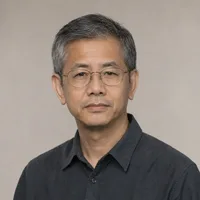
Reconstructing which pages, listings, and query interpretations appear to guide a system toward a Thai entity. Previously worked on search-result analysis, multilingual content inventories, and the classification of local business information.
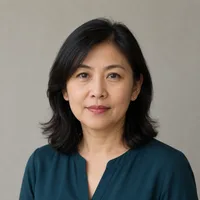
Distinguishing businesses and places affected by transliteration, shared names, branch structures, and ambiguous geographic labels. Previously edited bilingual reference material and reviewed naming consistency across directories, maps, and commercial websites.
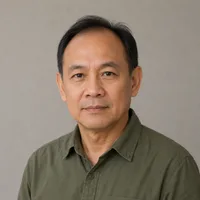
Comparing how generated answers change across models, prompt formulations, languages, and repeated observations. Previously designed qualitative research protocols and maintained structured records for recurring digital-content studies.
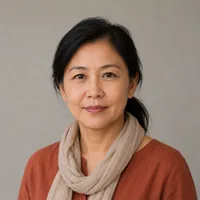
Testing whether cited or apparently retrieved sources support the business descriptions, recommendations, and location claims in an answer. Previously worked in research editing, source verification, and the close reading of commercial and travel information.
The laboratory publishes no calendar and no newsletter; new cases appear in the research record as the work advances.